Tour guide as a kind of career, it is a person who introduce the cultural and natural heritage of a tourism destination in the language chosen by visitors. And this career always needs an area-specific qualification usually issued and/or recognized by the appropriate authority(“What is a Tourist Guide? | World Federation of Tourist Guide Associations”, 2020). Then, what is the typical responsibility of a good tour guide? Here is the answer(skills & careers, 2020).
- undertaking research and planning tours
- preparing and giving presentations
- offering sightseeing advice
- organizing and leading excursions
- problem solving
- translating and interpreting
- transporting and accompanying tourists

As for talking about tour guide in a digital perspective, firstly, it is necessary to give the definition of digital tourism. Nowadays, digital tourism is becoming more and more common. And it concerns increasingly the combination of the real world under new digital technologies and tourist experience. These technologies have been used around for 10 more years which means it is still a new thing in tourism(Benyon, Quigley, O’ Keefe & Riva, 2013). It can be a recommendation system to help people find suitable hotel or restaurant, while it also can be an application on the mobile phone which guide people’s trips.
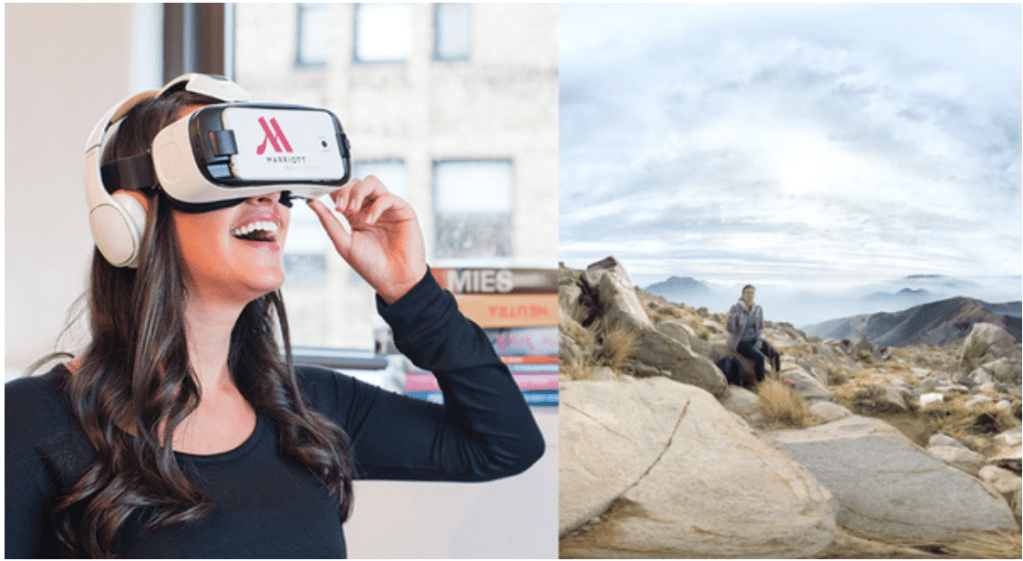
Under this digital background, what tour guide can do in tourism industry changed. Before this, the most significant duty of tour guide should be showing the tourist groups around the tourism destination such as natural spots and cultural heritages by introducing the background information or historical knowledge to help tourists make full use of their visiting time. Besides, they also need to organize the whole trip of tourist groups which includes making daily plan and taking care of tourists’ daily life during the trip. However, as mentioned, since the population of digital tourism, what tour guide can do trend to online more. In the scenic spots, compared with the real tour guide, virtual tour guide starts to have an important role. Based on some new technologies like VR(virtual reality) and AI(artificial intelligence), tourists could get information from virtual one since the explanation of a real tour guide sometime is easily influenced by surroundings. For example, if several tour guides are speaking at the same time, people will be disturbed by each other and it even might give negative impact on tourist experience. By this virtual way, everyone could use earphones and select their interesting part which would increase the effect of introduction.
Here is a case study about Dunhuang Mogao Grottoes, China. As the living world’s biggest and best-preserved Buddhist art treasures, the contradiction between long-term protection and tourism development based on the increase in the number of tourists. In the future, this scenic spot plans to launch new digital programs such as mobile virtual Mogao Grottoes experience, handheld Mogao Grottoes cultural libraries, wireless identification and tour booking and so on. In these new programs, what tour guide can do in this scenic spot will be partly replaced by digital technologies. The explanation of history or background knowledge would be the task of robots or machine instead of tour guides.

As a result, as these new technology could replace a part of work of tour guide, it is said that this career might disappeared in the future. This opinion could be one-sided to some extent. On the one hand, this job was done completely finished by manpower with high salary and training fee. Since the new technologies mentioned, it is true that there is less and less manpower need for this career especially guide interpreter. On the other hand, it does not mean this job will disappear later. This career does not include guide interpreter in scenic spots, it also covers workers from travel agency like local guide and designers. Robots and machines can not replace the personalized part in tourism. To clarify, a real tour guide could solve daily problems better like when a tourist lose an important thing or when face to some different questions from tourists during the trip. Besides, as the population of personalized trip, the design of personalized trip still needs to rely on people instead of machine. To conclude, although the manpower requirement of tour guide as is not as high as before since the development of new digital technologies, it still has rationality to exist. People should find a balance between digital development and manual service which might benefit tourism more.
Reference list
What is a Tourist Guide? | World Federation of Tourist Guide Associations. (2020). Retrieved 3 February 2020, from http://www.wftga.org/tourist-guiding/what-tourist-guide
Skills, C., & careers, J. (2020). Tour guide: job description. Retrieved 3 February 2020, from https://targetjobs.co.uk/careers-advice/job-descriptions/279155-tour-guide-job-description
Benyon, D., Quigley, A., O’Keefe, B., & Riva, G. (2013). Presence and digital tourism. AI & SOCIETY, 29(4), 521-529. doi: 10.1007/s00146-013-0493-8
 Zijun Zhao's digital blog
It is quite often to observe that more and more places offer a smartphone with different languages, which contains all information about the scenic spot. Tourists could just rely on the application provided by the phones instead of hiring a tour guide. I agree with you that the guide needs more personalised service, a human being could solve a lot of problems which machine could not solve. Under this situation, I am thinking about why does the use of machines is still increasing even with the understanding of people could not be fully replaced by robots?
Moreover, you have said that in Dunhuang Mogao Grottoes, the explanation of history will be replaced by robots. I want to know from your point of view that will this change the experiences of tourism? Is it good to change historical places into advanced technology places? Because I am worried if a place with a very long history surrounded by all kinds of machines.
In addition, I am worried that there will be a significant staff cut in tour guide even you have mentioned that the actual human tour guide could solve daily problems better than a machine, which could assure there is no cut in the tour guides. The unemployed tour guides must find new jobs. What could they do in the future if most of the task have been replaced by robots?
Overall, an excellent post, I really like it. Hope you could reply me as soon as possible.
赞赞
Hi~ Firstly, about why the use of machines is still increasing, I think it because the number of scenic spots is huge and even digital technologies are becoming popular, there still are many places that can not access them. In other words, the main reason should be that the popularity of digital tourism is not high and still need to be progressed. Next, it is not good to change historical places into advanced technology places of course. But, making some digital changes under a suitable degree is necessary since history also needs to be introduced by different methods at different times. Finally, about what unemployed tour guides could do, I think they can turn to career training, however, this kind of staff cut sometimes is inescapable during the period of technological change. I hope my opinion is helpful to you.
赞赞
In the future world, the tour guide is indeed a job that may be replaced by AI or intelligence. I think the original function of the tour guide is to guide. The future role of the tour guide is to tour. Guide: tells you the itinerary, the scenic spot content, the spectacular spot knowledge, the activity arrangement, and so on.Tour: assist tourists in arranging their daily needs, solving daily perplexities, and highlighting the critical method and experience of the tour. The front guide can be replaced by a machine, while a computer cannot replace the back experience.
On the other hand, according to the current reality, in the future, there is also the possibility of not being replaced by intelligence, especially non-English-speaking countries. For example, for the elderly, especially in China, tour guides are currently irreplaceable because they can’t use smart tools. Or for some of the three low groups in China: low income, little education, and low culture. And for people who rarely go abroad, a travel guide is also irreplaceable. There is no substitute for laziness. There are two kinds of lazy people. One is that they will not pay attention to the knowledge and needs of travel when they have time. For example, my mother likes to go out for fun but does not plan her trip well, so she can only make her demands. Then there are the so-called lazy, busy people who don’t have time to pay attention and don’t want to waste their vacation. In the future, will tour guides evolve into managers of intelligent robots, or respond backstage like customer service agents to demands that cannot be met by smart robots?
赞Liked by 1 person
I think there is no conflict between being managers of robots and staying backstage.
赞赞
Zijun zhao:
Hi! It is interesting to read your article. I find that, in addition to the VR and AI, the audio guide is a popular tool used to replace human tour guide.
For example, there are audio guide rental services in the British Museum. The audio guide is a machine like a mobile phone. Each exhibit in the museum has a unique code, and visitors can listen to the introduction of exhibits by entering the corresponding code on the machine.
My friend thinks the voice guide is useful, because it is easy to use and cheaper than hiring a human tour guide. But I don’t like it, because most of contents in the machine are standardized and boring.
Do you think the audio tour guide and other techniques can effectively improve the visitor experience?
Regards, Kelly.
赞赞
Of course, I think they can. And thank you for your advice.
赞赞
An interesting blogpost! I agree with that new technology is replacing tour guide profession. Personally, I prefer travel with my own preparation and recruiting a tour guide is not an option for me. There are more and more Apps which is able to tell everything you need to take before you start your travelling and everything you need to know about your destination. Tour guides are mainly targeting elder travelers who is not able to use those new technologies, and the targeting customers are still decreasing. Absolutely, this is a representative profession significantly influenced by digitalization. However, comparing with “find a balance between digital development and manual service”, in my opinion, I think the right direction of profession’s future is to integrate itself to digitalization, and make itself to be a indispensable part of those technologies.
赞赞
The author has comprehensively summarized the responsibilities of tour guides and the digital performance in modern tourism. Regarding the impact of digitization, the article proposes that digital technology can be used instead of manual guides. This is an innovative, appealing and interesting point. Digital guides can indeed improve the accuracy of the presentation and the travel experience. But I think human language is more contagious, and tour guides can make tourists feel more local features. It is also mentioned in the article’s summary that tour guides have more functions than voice guides.
I am also very interested in the use of VR technology. Although this method can better protect historical sites, I think it is more meaningful to be immersive in terms of experience. The design of personalized travel is an idea worthy of research and development, and the author can think more about this aspect.
赞赞
Hello Zijun,
I found your article was very interesting and I feel I learnt a lot more about the impacts of digital technologies on the tourism industry. As talked about in one of the other comments, the implementation of audio tour guides in institutions like the British Museum and Tate modern have already been incredibly successful, and from my own personal experience I only have positive things to say.
In your blog post you said there were certain roles that a machine could never replace a human, like helping tourist find lost property. But through the use of GPS technologies do you think that such machines could make the process easier, by allowing tourist to see a map and retrace their steps or providing them with the information to get to a help desk?
赞赞
V. Savchuk, V. Pasichnyk, (2015), Modern Tendention in the use of GPS Technology in Tourism Industry, An International Quarterly Journal, pp. 65-72
赞赞
I think what GPS can do in tourism is exactly to make the process easier, by allowing the tourist to see a map and retrace their steps or providing them with the information to get to a help desk, as you said.
赞赞